
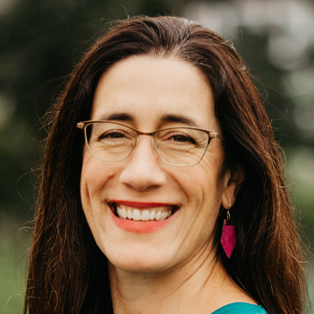
Hello friends and colleagues,
As those who know me well are aware, I’m not good with blood and I faint easily. So it’s not particularly easy for me to visit hospitals. And newborn intensive care units (NICUs) are especially challenging. Yet some of the most impactful moments I’ve had over the past few years happened in exactly those places. Let me explain.
Since the pandemic, I’ve been to Africa three times. While there, I’ve visited hospitals where a NICU might have 60 beds, but 180 or more babies on any given day. I’ve seen clinics with two or three newborns per crib, or a lone baby warmer for an entire unit, or a CPAP machine that has to be shared by dozens of struggling infants. The nurses and doctors in these clinics do heroic work in the harshest of conditions, often with limited supplies and medical equipment in deep disrepair. The conditions are, in a word, devastating.
Then, when I return to the United States and see the abundance we have here, it is difficult to reconcile the disparities and hard to navigate the dissonance. Once you’ve seen it, you can’t unsee it. And you can’t turn your back on it.
That’s why this latest issue of our newsletter features two distinct, but related, stories — one from close to home and one from half a world away. My hope is that together they will reveal something about how Roots & Wings is evolving and who we are becoming as a foundation.
As we’ve tried to signal since we opened our doors in 2020, Roots & Wings exists to give kids a strong and healthy beginning in life. That starts with the youngest children and their families in our own communities. And our commitment to them is not wavering.
Our partners across the U.S. are facing headwinds from many directions: flat budgets, rising costs, more families with infants and toddlers experiencing homelessness, and proposed federal changes that could wreak havoc on Head Start and Early Head Start.
In one of the stories that follows, Holding the Line for Head Start, you’ll meet Jen Bailey of Reach Dane in Wisconsin and Joel Ryan of the Washington State Association of Head Start and ECEAP. They, and many partners across our network, are standing up for the teachers, home visitors, cooks, bus drivers, and parents who keep these vital early learning programs running, just as they have for more than six decades now. They are also asking hard questions about what happens to the children and families who depend on them when the rug is pulled out.
Philanthropy will never be able to replace public support critical to the continued success of Head Start. But we can show up for those doing the heavy lifting. We can listen, offer flexible, multi-year support, and make sure our partners know they aren’t facing this alone. As Joel and Jen explain so effectively below, backing down is not an option.
While we remain committed to the youngest and most vulnerable in places like Wisconsin and Washington, our work continues to grow in other places. Much of that growth is happening in the Global South, especially sub-Saharan Africa.
When our foundation began, we expected to be primarily a U.S. funder with a meaningful, but small, global footprint. Now that is shifting, because the need is shifting. As health and wellbeing continue to improve in many parts of the world, poverty and disease are increasingly concentrating in sub-Saharan Africa.
According to the World Health Organization, the region currently accounts for about 70% of the world’s maternal deaths and nearly half of all newborn deaths. After two decades of steady progress, the number of African children dying before age five was projected to rise again last year for the first time this century. There are multiple reasons for this dramatic slide. Many wealthy nations, including our own, have sharply cut foreign aid in recent years, and a growing number of private funders have pulled back, too.
We refuse to be a part of that regrettable trend, which is why we expect to slowly, steadily expand our grantmaking in sub-Saharan Africa. The needs in the developing world have always been vast, but now they are growing. And the dollars we invest there will go remarkably far in saving lives. To be clear, this is not a trade-off for Roots & Wings. Our U.S. grantmaking is holding steady. But as our corpus expands, much of our new growth will go where the needs are the greatest.
This shift is personal for me. Twenty-five years ago, as a Peace Corps volunteer in West Africa, I felt helpless to address the challenges that I saw. Today, by contrast, I serve on the board of Partners In Health and on UNICEF’s International Council, two organizations making a big impact in the developing world. I’m also grateful to the Roots & Wings board for encouraging us to do more for our global community. It feels like a long journey finally coming full circle.
For every hospital ward that breaks your heart, there is another place that restores your hope. For me, that place is the Paul E. Farmer Maternal Center of Excellence in Sierra Leone.
I saw its construction, and I love the question that led to its creation: How do you provide, in a rural district of Sierra Leone, the same medical excellence we might expect in Seattle or Boston?
In our second newsletter story, A Midwife and a Dream, Isata Dumbuya answers that question. A nurse, a midwife and a tireless advocate for maternal health, Isata helped turn a simple idea scribbled on a folded sheet of paper into a center that, nine months after opening, is busier than anyone imagined. Women helped build it, women run its wards, and the trust of local traditional birth attendants keeps mothers coming through its doors. It took audacity. It is saving lives every day.
Jen, Joel, and Isata work in very different places. But listen closely to what they say in these stories and you’ll hear the same advice: Trust the people closest to the work. Support what families need. And when things get hard, be bolder.
The headwinds we face abroad and at home are very real and relentless. But we won’t waver. We’ll keep meeting our partners where the need is greatest, stateside and around the world. Thanks for being our partners in this effort.
With gratitude,

Executive Director
Nine months after opening its doors, Sierra Leone’s Paul E. Farmer Maternal Center of Excellence is busier than anyone planned. Isata Dumbuya, the midwife who helped dream it up, says that’s exactly the point.
By David Brotherton
At 10 o’clock on the morning of February 14, the doors of the Paul E. Farmer Maternal Center of Excellence (MCOE) in Kono District, Sierra Leone, opened for the first time. Nobody came through them.
There was no ribbon-cutting that morning. The pomp and ceremony had happened months earlier. Partners In Health (PIH) and Sierra Leone’s Ministry of Health had decided that on Valentine’s Day they would simply open the doors quietly and welcome any woman who arrived. Isata Dumbuya, the midwife who had spent eight years helping turn the center from an idea into a building, had a hunch about the delay. She walked up to registration.
“Exactly as I thought, there were three women sitting there, and one was clearly pregnant,” she recalls. “I said, ‘What have you come for?’ She said, ‘I’m pregnant and I’ve got abdominal pain.’ I’m like, yes, first one! Here we go. Walking down there with her, holding her hand, it’s almost like when you say, ‘The bride is coming, the bride is coming.’ We were all so excited. We were all so thrilled.”
Within five minutes, three more women arrived. None were from Kono, and none seemed to even know that was opening day. They came because they had heard about the outcomes PIH’s team was achieving in its older maternity ward nearby. Each one arrived with a complication. By midnight, the team had performed nine emergency cesarean sections. The center’s first normal delivery didn’t happen until the next day.
“For those of us who were clinicians, all we saw that day were women we could give the highest and best quality care to, and they all had good outcomes for their babies,” Dumbuya says. When she finally went home that night around 9:30 p.m., one thought ran through her head: “Everything works. Nothing leaked, nothing broke, nothing cracked. And babies kept on coming.”
They haven’t stopped since.
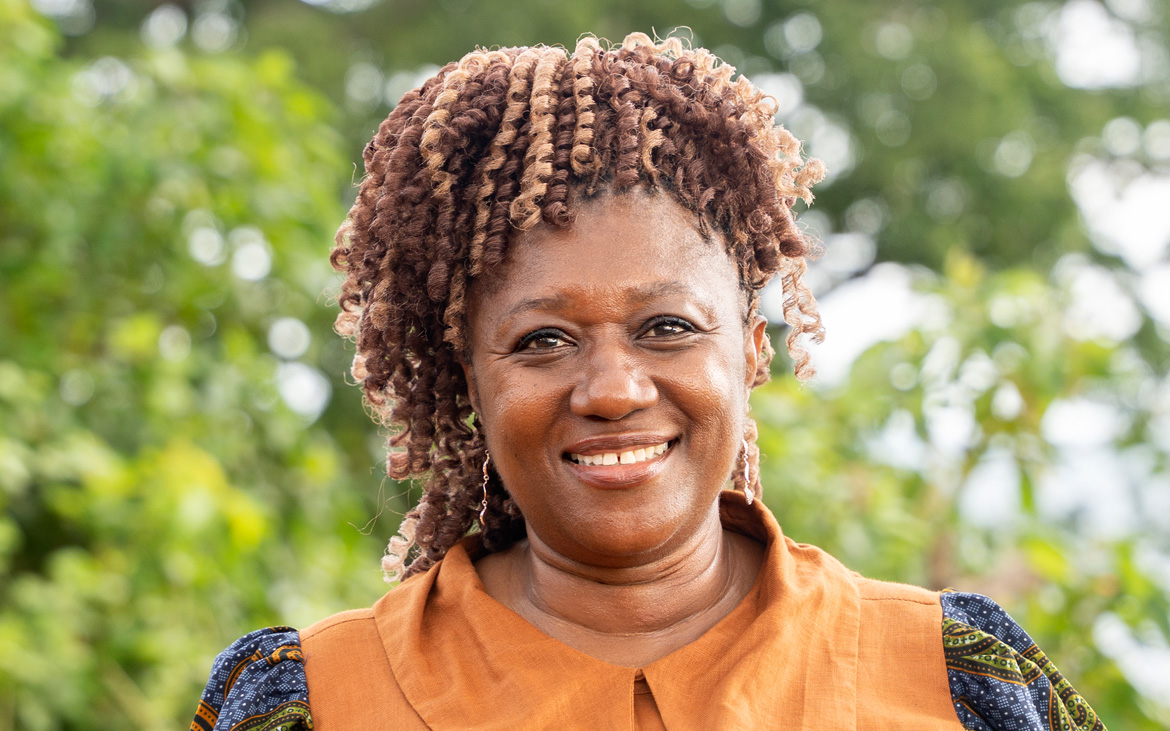
Isata Dumbuya, formerly director of reproductive, maternal, neonatal and child health, has just transitioned into her new role as MCOE’s first global ambassador, carrying the center’s story to the world.
On October 13, Dumbuya worked her last day as PIH Sierra Leone’s director of reproductive, maternal, newborn and child health. But as she prepares for her next role, she isn’t going far. She will be staying with PIH as the MCOE’s first global ambassador, carrying the center’s story to the world.
It’s a fitting moment to look back at how far she, and the center, have come, and how the vision of a dedicated few is now saving lives for thousands more.
Dumbuya was born in Kono and spent her teenage years in Freetown before moving to the U.K. and building a career of more than 25 years in British nursing and midwifery. In London she split her weeks between public health and the delivery room, raising five children of her own along the way, now ranging in age from 35 to 14. During all her years in the UK, Isata saw only one maternal death in the hospitals where she worked. Meanwhile, the figures she heard from her childhood home in Sierra Leone were staggering: at one point, as many as 1 in 17 Sierra Leonean women were dying from complications of childbirth. Even today, a woman in Sierra Leone faces a 1 in 74 lifetime risk of dying in childbirth.
“I started asking myself, how do you justify being there in the UK, doing everything you’re doing in midwifery, and yet here in Sierra Leone things are really not working?” she says. “I wanted to put my money where my mouth was.”
Short teaching trips back to her native Sierra Leone left her frustrated and unfulfilled. “Returning to Sierra Leone and staying for a month or two, that was like a holiday,” she says. “You go in, you teach your training, you’re out again, and nothing really changes.” Then she read about PIH’s plan to build a maternal center of excellence in Kono. “I thought, the idea seems crazy. But it’s what’s desperately needed. And so I applied.”
When she arrived in 2018, she came to learn that the “plan” consisted of little more than scribblings on a double-folded A4 sheet of paper, sketched by five colleagues one night in a guest house. There was no funding. The existing maternity ward had 41 beds and one clinician on staff. Many of the nurses had grown numb to loss. “People were like, this is what happens, it’s God’s will, women are going to die in pregnancy,” she remembers. When she pushed back, they told her she didn’t understand because “she wasn’t from there.”
She started with the ward she had. Within a year, maternal deaths at the hospital fell from 35 in 2018 to 21 in 2019. Her team’s small special care baby unit began saving preterm infants weighing less than 800 grams. Those results drew in partners, including author John Green and his wife, Sarah, who visited in 2018 and pledged to help raise $25 million. “John turned around and said, ‘Do whatever it takes,'” Dumbuya recalls.
The plan doubled in size. At the 2021 groundbreaking, Dr. Paul Farmer told her it still wasn’t ambitious enough. “He says, ‘You’ve done a great job, but you need to dream more. I want to see where the breast cancer center is in this building,'” she says, laughing. “I’m like, dude, please. Let’s bring this down a notch. One step at a time.”
Some of the nurses who once dismissed her are still on her team. “In 2018, they wouldn’t give me the time of day: ‘This woman is a humbug, she’s a nuisance, and she needs to leave us the hell alone,'” she says. “Now you could take them from here and drop them anywhere in the world, and they would perform as some of the highest-functioning nurses and midwives you could ever come across.”
The MCOE opened with 120 inpatient beds, three operating theaters and Sierra Leone’s first neonatal intensive care unit, with 39 NICU beds. It still isn’t big enough.
By the end of August 2026, the center had delivered nearly 2,500 babies, averaging about 95 deliveries a week. Its cesarean rate has fallen from roughly half of all births in the old ward, even as volume has climbed. And the number of women dying is going down.
“I don’t believe there’s a single bed here that has gone a full 24 hours without a patient on it,” Dumbuya says. “We have built something so successful that we are overrun with patients. I’m now realizing we could have made this place even bigger.”
The demand puts real pressure on staff, and Dumbuya worries about them as much as the patients. “You constantly have to think about how to keep them motivated, revived, interested, recognizing the great work they’re doing,” she says. “But also: I know you’re tired, but I’m sorry, you still need to keep going, because we need to keep these patients safe.”
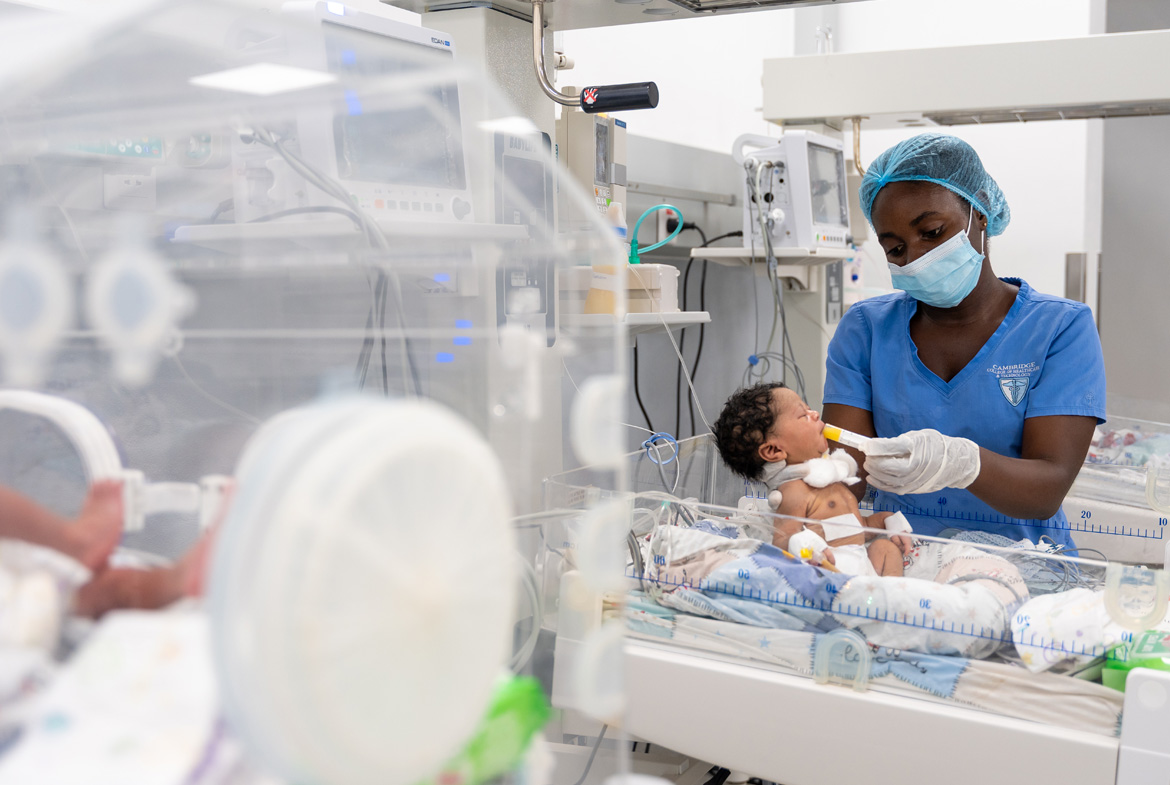
Daniella Jabati, state registered nurse feeds a newborn in the inborn ward of the neonatal intensive care unit at the MCOE. The 39-bed NICU is the first in Sierra Leone.
It also means saying no. Not all 39 NICU beds are in use yet, because there aren’t enough trained staff to run them safely. A seven-bed room for Kangaroo Mother Care sits ready, and the pressure to open it has been intense.
“The staff, and even the ministry, say open it, open it, open it,” Dumbuya says. “And I’m like, we’re not going to open this just for a photo-opportunity. Then the next week I start hearing babies are developing complications there, because I don’t have the staff to be there 24/7. It’s not about bragging about a brand-new toy. If it’s not in [the patients’] interest…I’m sorry, guys, we’re not opening it.”
It’s a principle Farmer would have recognized. He liked to say you can deliver bad care in good facilities, but you can’t deliver good care in bad ones. “It’s not a one-time thing,” Dumbuya says. “It has to be constant. You need to keep working on improvements and getting better every day.”
Women have shaped the MCOE at every stage, from imagining it to building it to delivering the babies born inside it. At the peak of construction, women from Kono made up 65% of the workforce. Most had never worked in construction before.
“The women building that place took it as a personal thing,” Dumbuya says. “I would go there every day and they would tell you, ‘My grandchild will be having a baby here, so I want to make sure this place is stunning.'” Some builders in their 40s told her they wanted one more baby just so they could deliver it there. “I’m like, hey, we’re here to save lives, not create problems,” she laughs. “Some of us need to accept that we’re going to be grandmothers in this place.”
Inside the center, women run the wards, and the midwives Dumbuya trained carry the daily work. She leads them the way she raised her own children. “I’m a mother of five, but I also say I’m a mother of another 505,” she says. “Everyone in this place calls me Mom, to some degree. I see them not just as people who come to work, but as humans. What makes them tick? What’s going on with them? How can I help you be a better version of you? Because as long as you are okay in yourself, you’re going to be more productive.”
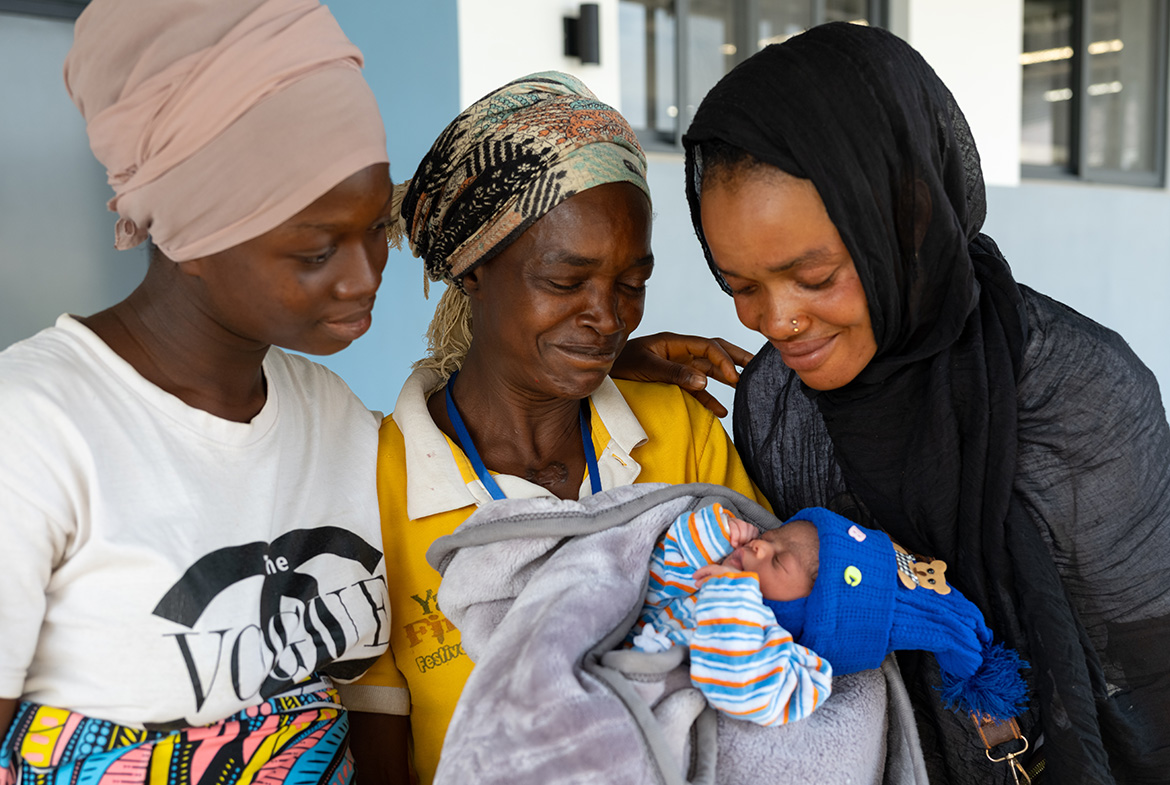
Four generations gather on the day of Hawa Lebbie’s discharge from the Maternal Center of Excellence. Hawa Lebbie (left); her grandmother, Augusta Mansaray (center), holding Lebbie’s newborn son; and her mother, Fatmata Mansaray (right).
The MCOE’s facilities and equipment are unprecedented in Sierra Leone, but Dumbuya believes its most important asset is trust. Years of civil war and the Ebola epidemic left many Sierra Leoneans afraid of hospitals. Maternal care has been officially free for almost 15 years, but it isn’t truly free for everyone when a woman arrives to deliver. So many women stayed home and turned instead to traditional birth attendants (TBAs), the trusted older women in every community.
“This is the mama that lives in the community, who delivered your grandparents,” Dumbuya explains. “She knows you, she knows your family, and she treats you differently. When you come to a hospital, you have a nurse or midwife that just says, ‘Hi, bye, sit here, do this, do that.'”
When deliveries went wrong at home, women often reached the hospital too late. The government had come to discourage TBAs, and their work went underground. Dumbuya took the opposite approach.
“I said, I’m sick and tired of fighting against these women. We need to go to them and figure out how we’re going to work together, because at the end of the day, we’re dealing with the same client group,” she says.
Since 2022, PIH has partnered with 191 TBAs across Kono District. They no longer deliver babies themselves. Instead, they accompany women to clinics, and they have made more than 36,000 referrals to health facilities for antenatal care, family planning, postnatal checkups and, most importantly, births attended by trained midwives. Dumbuya credits them as a major reason maternal deaths have fallen.
The trust now runs so deep that women travel long distances to reach the MCOE. Some leave hospitals in Freetown against medical advice because they have heard what is happening in Kono. “We are not that far from other hospitals that women would not go to,” Dumbuya says. “They’d stay at home as long as possible and only go kicking and screaming. Our problem is that we have too many of them coming, because they trust the system and know they’re going to get good quality care.”
For Dumbuya, that trust was built by asking people what they needed, not telling them. “Whatever you’re doing, involve the people who are going to be affected by it. Let them have a voice and a say in the planning,” she says. “Because they start to own it with you from the beginning, you get more cooperation, more input, better use of the facilities. It’s for them. It’s theirs.”
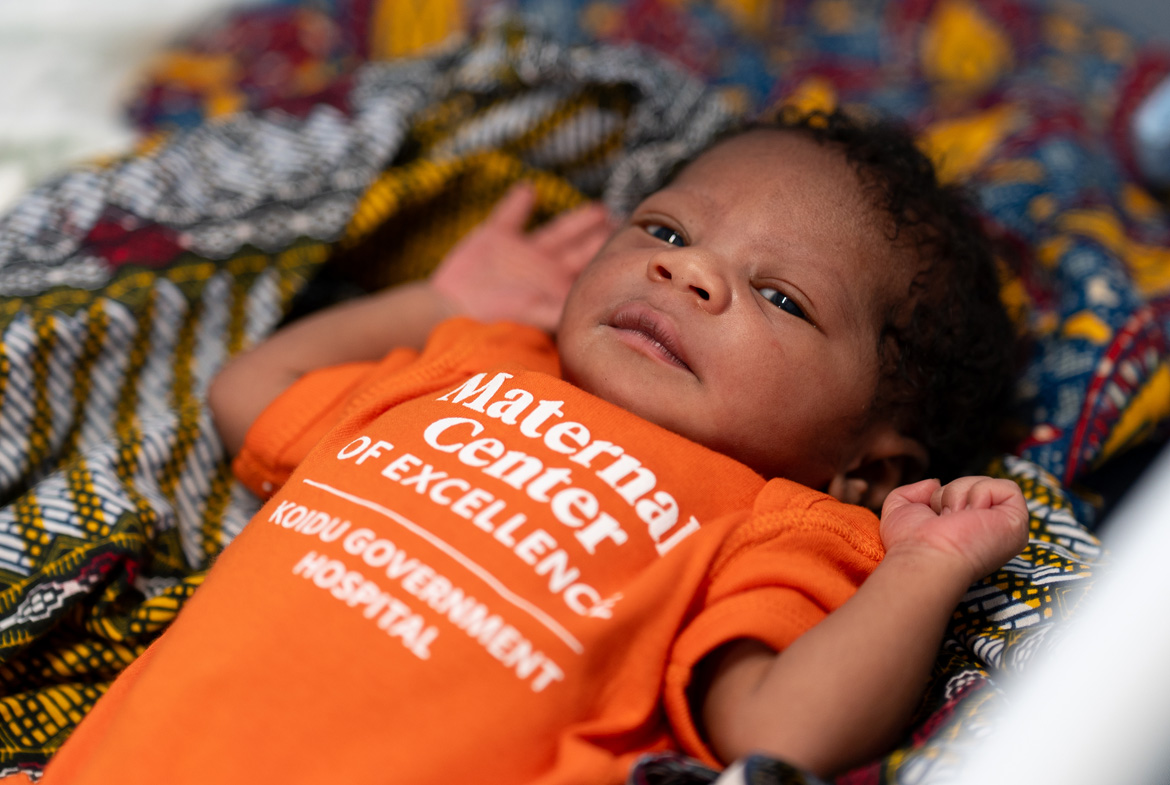
Augusta Thomas’s newborn son rests in the post-operative ward, wearing an MCOE onesie. Thomas delivered her baby boy by cesarean section on the opening day of the MCOE at PIH-supported Koidu Government Hospital in Kono District, Sierra Leone.
As she steps into her ambassador role, Dumbuya has a clear message for funders, in Sierra Leone and here at home. “Don’t think short term. Don’t think instant results or a big headline. Think sustainability,” she says. “Too many times people fund things for a headline, or for five years, without really thinking about what happens at the end of the five years. It has to be the gift that keeps on giving. Not a gift that ticks a box, and then it’s on to the next thing, and guess what? When you left, things went back to how they were, or even worse.”
The MCOE was built to keep giving. A training center and dormitory now under construction nearby will prepare the next generation of Sierra Leonean nurses, midwives and doctors. And the question Dumbuya hears most often is no longer whether a center like this can work in Sierra Leone, but how to build more of them, so women don’t have to travel so far for good care.
She plans to keep part of her time at the center, close to what she calls “my babies” and the team she built. Eight months in, she still finds it hard to believe.
“I walk through there and I’m always awed and inspired, as well as touched,” she says. “I still cannot believe it. Guys, we actually did this. It’s working, and it’s making a difference.”
Roots & Wings is proud to support Partners In Health’s work at the Paul E. Farmer Maternal Center of Excellence. Roots & Wings Executive Director Shana Dall’Osto serves on the Partners In Health board of directors.
A federal overhaul threatens the program that has given low-income children and families a strong start for 60 years. Across the country, Roots & Wings partners are fighting back, and we’re standing with them.
By David Brotherton
In August, the U.S. Department of Health and Human Services (HHS) proposed one of the most sweeping rewrites of Head Start in the program’s 61-year history.
The rule would replace roughly 133 pages of federal performance standards with about a dozen. Those standards govern how programs serving more than 700,000 young children nationwide keep children safe, healthy, and learning.
Under the proposal, federal limits on classroom size and staff-to-child ratios would give way to state child care licensing rules, which in most states are far looser. Guaranteed health, vision, hearing, and developmental screenings would end. Instruction would be English-only. Families who can’t document their income, many of them experiencing homelessness, could no longer qualify by signed statement. And the share of a program’s budget that can go to administration would be capped at 5%, down from 15%.
HHS says the changes will give local programs greater flexibility and will save U.S. taxpayers about $2.2 billion a year by 2031. Critics see a cut, not a savings. A coalition of advocates, Together for Head Start, used HHS’s own projections to estimate that nearly 40,000 Head Start jobs could be lost nationwide.
The public comment period closed October 6 with roughly 40,000 public comments filed. A final rule could come at any time.
The proposed overhaul follows a year of upheaval that has buffeted the program: frozen grant payments, the closure of half the federal regional offices that support local programs, banned-word lists, and immigration restrictions that courts have since blocked. Early Head Start, which serves pregnant women, infants, and toddlers, faces the same rules, including — punishingly — the removal of limits on home visitors’ caseloads.
| Wisconsin | Washington | |
|---|---|---|
| Children in Head Start and Early Head Start | 15,000+ | 14,000+ |
| Jobs projected to be lost under the rule | 556 | 774 |
| Projected added child care cost per child, per year | $757 | $860 |
SOURCES: Enrollment – Wisconsin Head Start Association and Joel Ryan, Seattle Times. Projections – Together for Head Start, using HHS’s high-estimate scenario.
In Wisconsin and Washington, two Roots & Wings partners are leading the response.
Jen Bailey runs Reach Dane, which serves more than 650 children and families through Head Start and Early Head Start in Dane and Green counties. She also chairs the Wisconsin Head Start Association’s board. Joel Ryan leads the Washington State Association of Head Start and Early Childhood Education and Assistance Program (ECEAP).
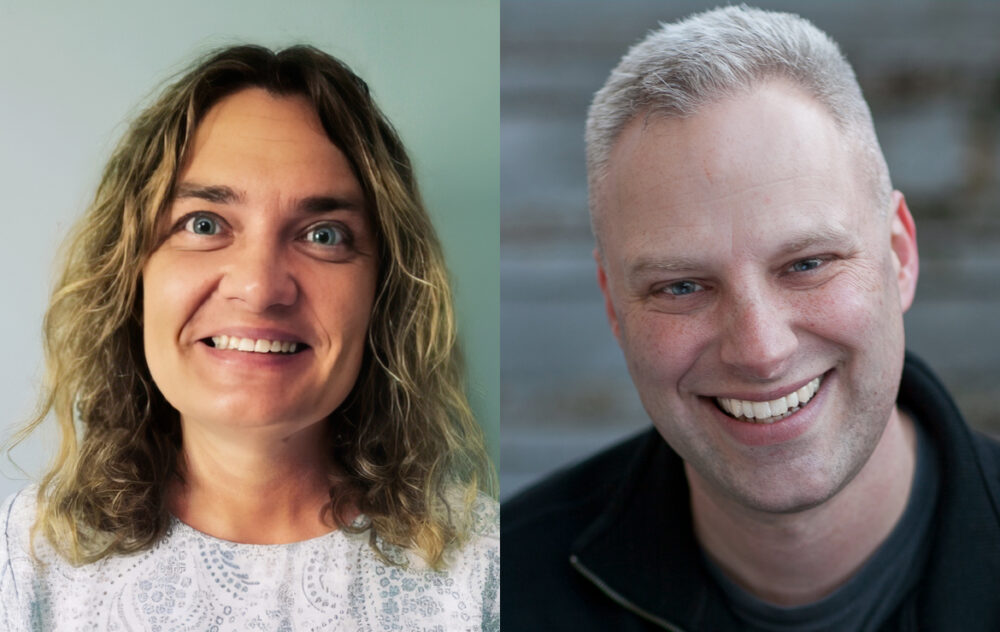
Jen Bailey of Reach Dane (left), and Joel Ryan of the Washington State Association of Head Start and Early Childhood Education and Assistance Program
Ryan and Bailey are far from alone. Across Roots & Wings’ grantee network, organizations are pushing back — some in public and others more quietly. Across the country teachers, cooks, bus drivers, home visitors, and parents are holding these programs together while their own futures hang in the balance. This story is for all of them.
Ryan calls the proposed rule changes “a Trojan horse.” The administration, he says, “is trying to get inside Head Start now, after several frontal assaults.”
Bailey sees the same logic in the promise of flexibility. “Ultimately,” she says, “they are not going to fund what they don’t mandate.”
For the families Reach Dane serves, that’s no abstraction. Homelessness among the infants and toddlers in its Early Head Start program rose again this year. Bailey says the families who need to self-attest are often those fleeing domestic violence or without a birth certificate for their child: “the most vulnerable in our community, 100%.”
Staff are under strain too. Reach Dane is in its second year of flat federal funding. An entry-level classroom assistant earns about $17 an hour. “You can’t survive in Madison on $17 an hour,” Bailey says.
Reach Dane already staffs preschool classrooms with three adults, above today’s federal standard, because so many children need individual support. Going below that standard, Bailey says, would be “categorically unsafe.”
Advocates are fighting on several fronts. Ryan’s association, working with the ACLU, has won court rulings against earlier federal actions, and Wisconsin’s association has joined that litigation. WSA’s Parent Ambassador program trains Head Start moms and dads to make their case to policymakers, both in Olympia, WA and Washington, D.C.
“What will ultimately save Head Start,” Ryan says, “is that there are really engaged, active parents and staff in just about every, if not every, congressional district.”
But because these proposed rule changes will come through executive action rather than legislation, organizing alone isn’t enough. “You need to couple it with a legal strategy,” Ryan says.
If the federal floor drops away, how do programs keep the best of Head Start alive? How does a teacher reach a 3-year-old who is still learning English if the rules say every lesson must be in English? Who pays for the dental screening, the home visit to a new mother, or the family advocate if the federal government stops requiring, and funding, them? What happens to a family living in a car if a signed statement is no longer enough?
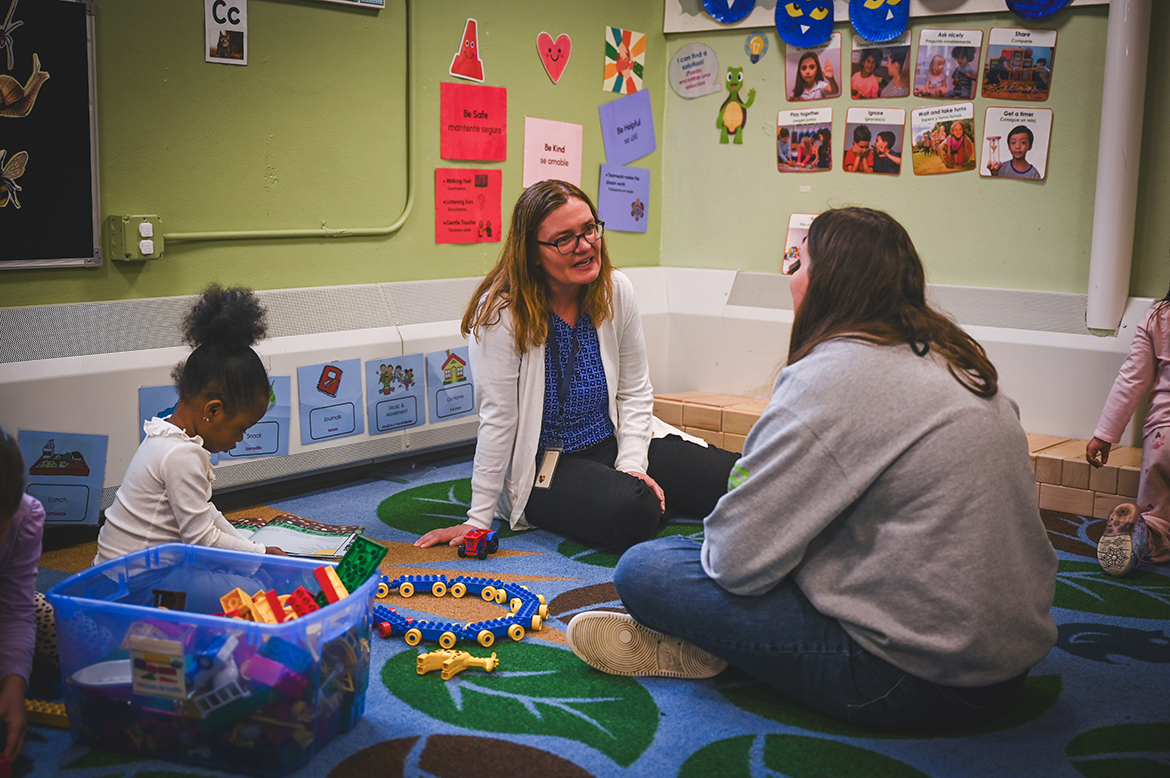
“Two of the greatest gifts you can give a child are roots to grow and wings to fly,” says Shana Dall’Osto, executive director of Roots & Wings. “Head Start and Early Head Start have given millions of children both, from before birth to the first day of kindergarten. If those services are stripped away, what will happen to those children and families? We don’t have all the answers. But our partners didn’t create this crisis, and they shouldn’t have to face it alone.”
Courtney Jiles, who leads Roots & Wings’ early childhood work, says partners are already wrestling with impossible choices. “How do you keep three adults in a classroom of preschoolers who’ve lived through trauma, or keep a health coordinator on staff, when no one in Washington, D.C., is requiring it or paying for it?” she asks. “Our job as funders is to help our partners hold on to what works while they fight for the rest.”
No foundation, or set of foundations, will ever have the resources to replace federal dollars. That’s why Roots & Wings joined 56 other grantmakers in signing on to an Early Childhood Funders Collaborative comment urging HHS to withdraw the rule. The comment that Roots & Wings endorsed warned that the $2.2 billion gap HHS envisions “is far beyond our capacity to support as private philanthropy.”
But there are things funders can do to support the fight. For starters, Ryan urges funders to back parent organizing and invest in the capacity of small state associations to advocate and speak out. In that same spirit, Bailey says flexible support is essential — whether it’s for fighting fires like this one, or keeping innovation alive when rule changes demand Head Start providers to adapt. At Reach Dane, for instance, Roots & Wings funding helps support a therapeutic classroom for 3-year-olds with trauma histories, and year-end payments that lift staff morale. “It is like a little spark of light and joy in the darkness,” she says.
Roots & Wings cares about the whole span of early childhood, from prenatal through age five, which is why Early Head Start matters to the foundation just as much as Head Start. It’s also why the foundation backs the people doing this work with flexible, multi-year support— so they can lead.
When crises like this one flare up, Ryan’s advice to funders is to be bolder. “A lot of funders will do the softer stuff. Do an advocacy day, do this, do that,” he says. “It’s all helpful. But at some point, legal defense is necessary, and I would love to see funders be more explicit about that.”
Bailey doesn’t know how this fight will end. But she knows what she tells her staff.
“We can all rest easy with our own conscience that we have done everything we possibly can to fight for our staff and our kids and our families,” she says. “At the end of the day, I believe that matters, and that it makes a difference.”
